
Top Sparx Electrical Cuts Fuel Costs in Half with Electric Vehicles
Discover how Top Sparx Electrical made the switch to EV with Schneider Charge chargers and made significant savings in a time of rising fuel costs.

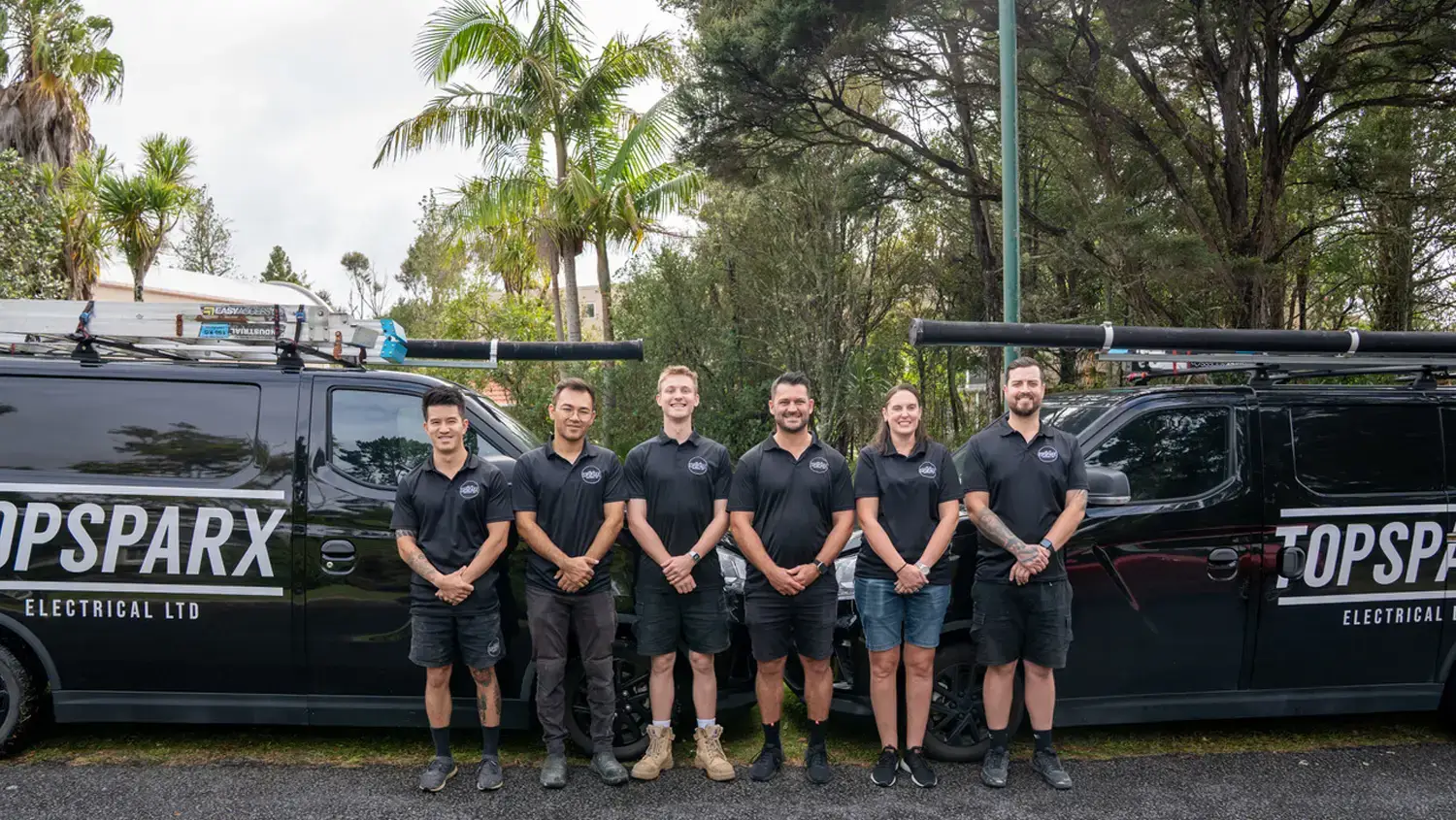
In a time of rising fuel costs, Top Sparx Electrical in New Zealand cut their fuel costs in half switching to electric cars and using Schneider Charge EV chargers. Find out how the Top Sparx team made this change and discover the financial and sustainability benefits of transitioning to EV.
The Problem: Operating Costs Out of Control
For sparkies across New Zealand, fuel costs have become one of the biggest drains on profitability. With diesel sitting around $3.00 per litre, 57% of small to medium businesses report fuel is a top operational concern. The cost difference is stark: diesel vehicles burn through $32 to $40 per 100km, while electric vehicles only cost roughly $3 per 100km to run.
EV adoption is rising across New Zealand at a rapid rate, though it’s still relatively new in the trade. But for businesses like Top Sparx Electrical, who are willing to make the switch, the savings are real.
Dillon, owner of Top Sparx Electrical in Auckland, felt the pressure of running two diesel Toyota Hiaces and his own ute. With his annual vehicle costs hitting around $42,000 covering fuel, maintenance, and related expenses. Fuel alone was costing about $150 per week, per vehicle.
“It was crazy. I was looking for a way to reduce my running costs, so I looked into electric vans,” Dillon says. “Even a couple of years ago they were too expensive, but the costs have reduced significantly, so they are now cheaper than a similar-sized diesel.”
Just two years prior, EV vans were running $55,000 to $60,000 a significant cost for most electrical businesses. But when Dillon checked again, the market had shifted. The latest EV van price? Just $25,000 brand new.
The Solution: A Practical EV Fleet Transition
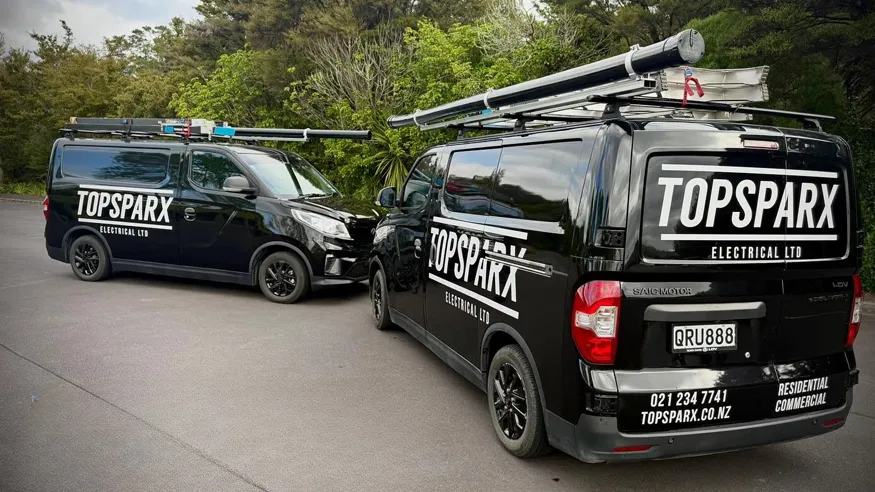
Dillon didn’t flip his entire fleet overnight. Instead, he transitioned to EV vans as his older diesel vehicles came up for replacement. A practical, low-risk approach that kept the business running smoothly.
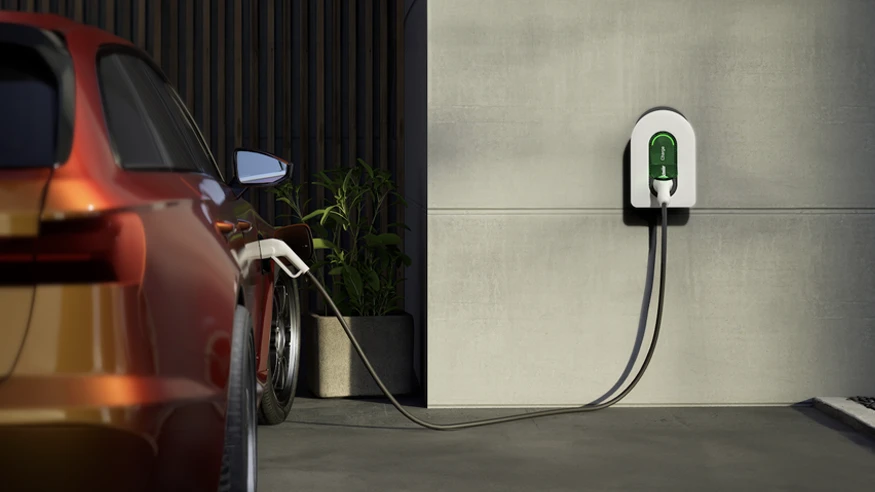
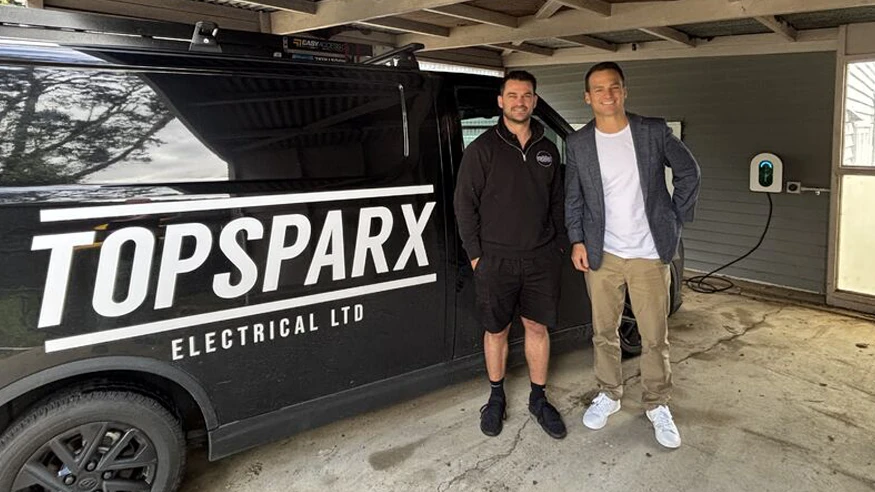
And how did he reduce costs in the long-term? A straightforward approach: install a home charger at each team member’s house. Dillon paid to have a Schneider Charge installed at his employee’s home, giving the team a simple routine — plug in at night, wake up to a fully charged van every morning.
Why the Schneider Charge?
When it came to choosing a charger, Dillon didn’t need to look far. He’d already been using PDL by Schneider Electric products for standard electrical work — switches, power points, and other gear he trusted on job sites.
“I have a good relationship with Schneider through their reps, and we use many of their products for standard work such as power points and switches,” Dillon explains. “Schneider provides a good product and it is well priced.”
Other features of the Schneider Charge
But beyond his relationship with the brand, installing the Schneider Charge was a practical choice. The Schneider Charge comes with an integrated RDC-DD, which detects smooth DC fault currents. This RCD-DD is something some chargers in the market don’t include. “You would otherwise need to install the Type B RCD separately in the switchboard, adding about a $600 cost,” Dillon says.
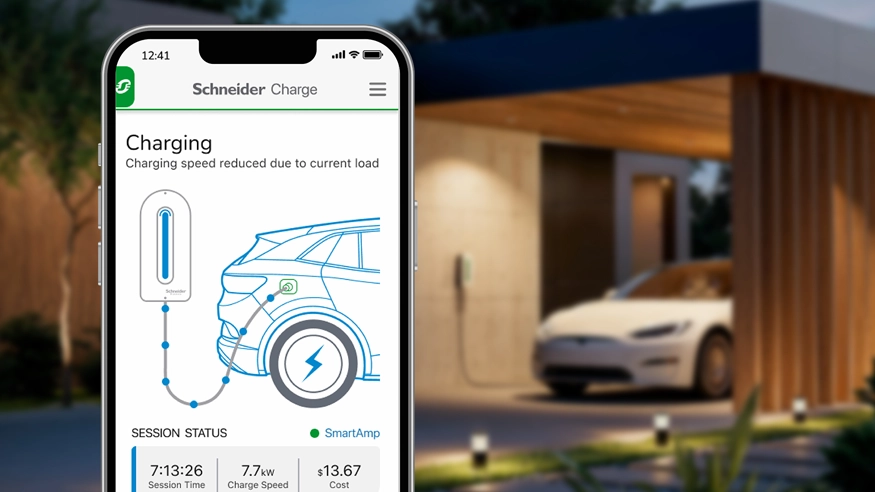
Then there’s the app. The Schneider Charge app tracks overnight kWh usage, charge status, and estimated cost — giving Dillon full visibility into what each vehicle is costing to run. Dillon explains that the app “made it easy for us to work out weekly savings.” For a business owner, tracking these expenses can help monitor operating costs. But having first-hand experience with EV charging can also provide invaluable transparency to clients who are seeking a similar solution.
The Results: Real Savings, Real Fast
The numbers speak for themselves. Weekly running costs dropped from around $150 per vehicle (diesel, excluding maintenance) to about $70 to $80 per week after New Zealand’s electric road user charges. That’s roughly half the weekly cost compared to diesel.
Maintenance is lighter, too. Service intervals are every 30,000 km, and with fewer moving parts, there’s simply less that can go wrong. Day-to-day operations are simpler, staff go home, plug in, and the van is fully charged each morning. No more fuel stops cutting into job time.
Public charging is rarely needed. The vans do around 200km per day, and even fully loaded with multiple short trips, they only occasionally need a half-hour top-up at a charging station during breaks. “95% of the time it’s not an issue,” Dillon notes.
Beyond the cost savings, reducing carbon emissions is a positive factor for Dillon. Not just for the environment, but as a point of difference when talking to clients and the wider industry.

The Challenges (And How to Handle Them)
It’s not all smooth sailing. The smaller EV vans have less interior space than the Toyota Hiace, which means the team has had to get better at stock management and organisation. It’s a trade-off, but one that’s manageable with a bit of planning.
The other limitation? Charging access. The home charging model only works for staff with off-street parking. If your team doesn’t have driveways or garages, you’ll need to think through alternative charging solutions.
The Bigger Picture: Leading the Way
With his experience with EV fleet transition and charging, Dillon isn’t keeping this to himself. He’s actively talking to other in the industry about what he’s achieved, and the response has been strong.
“I’ve told others across the industry about the benefits, and people are pretty interested. A lot didn’t think shifting to EVs was viable, until I told them about what I’ve achieved. The vans are cheap and there are lower ongoing costs — I think this model would help anyone, from small businesses up.”

Ready to Cut Your Fuel Costs? Work with us!
If you’re looking to reduce your operating costs, it’s worth taking a serious look at EVs. The upfront cost has come down, the running costs are half what you’re paying now, and PDL by Schneider Electric are here to support you with this transition. The Schneider Charge is proven to be a reliable and cost-effective EV Charging solution that is pivotal to your fleet transition.
Join Top Sparx Electrical’s in being one of the first in the electrical industry to make the switch to EV and experience real savings. The numbers don’t lie.
Make the switch to the Schneider Charge today!
Learn more about the Schneider Charge and other electric vehicle chargers offered by PDL. Simply click the link below.
Continue exploring

Join Club PDL
Discover Club PDL, New Zealand’s largest community of electricians. Explore rewards, community events, training, and more.

Training
Browse online courses on our Training Hub, including modules on ranges like Wiser Smart Home and SpaceLogic C-Bus home and small building automation system.

Trade Talk
Discover Trade Talk, our hub for all things electrical: covering technical, back of wall, and more.

Trade Blogs
Browse our Trade Blogs hub to find articles to guide your trade and business, showcasing the best solutions and products for your customers’ needs.